Showing posts with label D. Factual programming. Show all posts

Tuesday, 30 June 2015

Research: 3 Minute Wonder

3 Minute Wonder is a short Channel 4 television slot that broadcasts first time directors' three-minute TV programmes in the middle of the channel's weekday primetime schedule. It offers first-time directors and assistant producers the opportunity to air their work to a large audience, and in doing so, to take a first step into the competitive UK film industry.The 3 Minute Wonder strand is part of the Channel 4's 4Talent initiative to help new talent break into the very competitive UK television industry. Other projects in the scheme include FourDocs and the Channel 4 Sheffield Pitch documentary competition.

3 Minute Wonder - Last Supper
This one is about a man who has committed murder and is on death row, the title is called Last Supper because it is a topic that is spoke about a lot on death row as you get to choose your last supper before you die. I like this one because it gives an insight into the people on death row, i learnt about the crime he committed and how the death penalty works in jail. The documentary format is an observational one, as it solely focuses on him as a person and his crime and there is no voice over but several shots of the setting. i feel this documentory is harrowing and shows how easily a life can be changed by the events and actions one might commit


3 Minute Wonder - Heavy Addiction
This short looks at the reality of body building and asks the question of whether it is just a hobbie, or an addiction. The documentary is set in a gym and interviews some of the passionate body builders that attend. I like this documentary as i feel it shows the passion in which people have for this. the man they intereiw i feel is the most honest and realist about his addiction to body building and the effect on his mental health . I feel the woman is less realistic in the way that shes not looking at the effect its having on her more about what she wants to do in the future.
The mode used here is the expository one, using interviews with people who have first hand experience with the topic that is being focused on, to relay the information extracted to the audience.


Karl Pilkington: Life
I liked this short film because it’s both funny yet informative. Karl’s way of explaining things are odd from the normal so give you a different perspective on things most of us know and haven’t thought as deeply into as he seems to within this documentary .I have learned very little apart from the fact of looking at things from a different way can give you a different opinion and thoughts on a subject.


BARB market research

From the BARB website this is the percentage of popularity in the documentaries and other entertainment programs. As you can see 11.9% coming in third of the most popular types of program, this is where documentaries lie. Surprising it is above the news and just shows how maybe the pubic seem to believe documentaries more than the news, however this is only a possibility. Could be seen the other way round as drama which is fake is more popular than documentaries, this means that the public could possible prefer a fake and fantasy instead of the truth and reality. As we have seen the documentaries that tend to be on at prime time are ones in the public interest and most relation towards the subject.

tv guide research
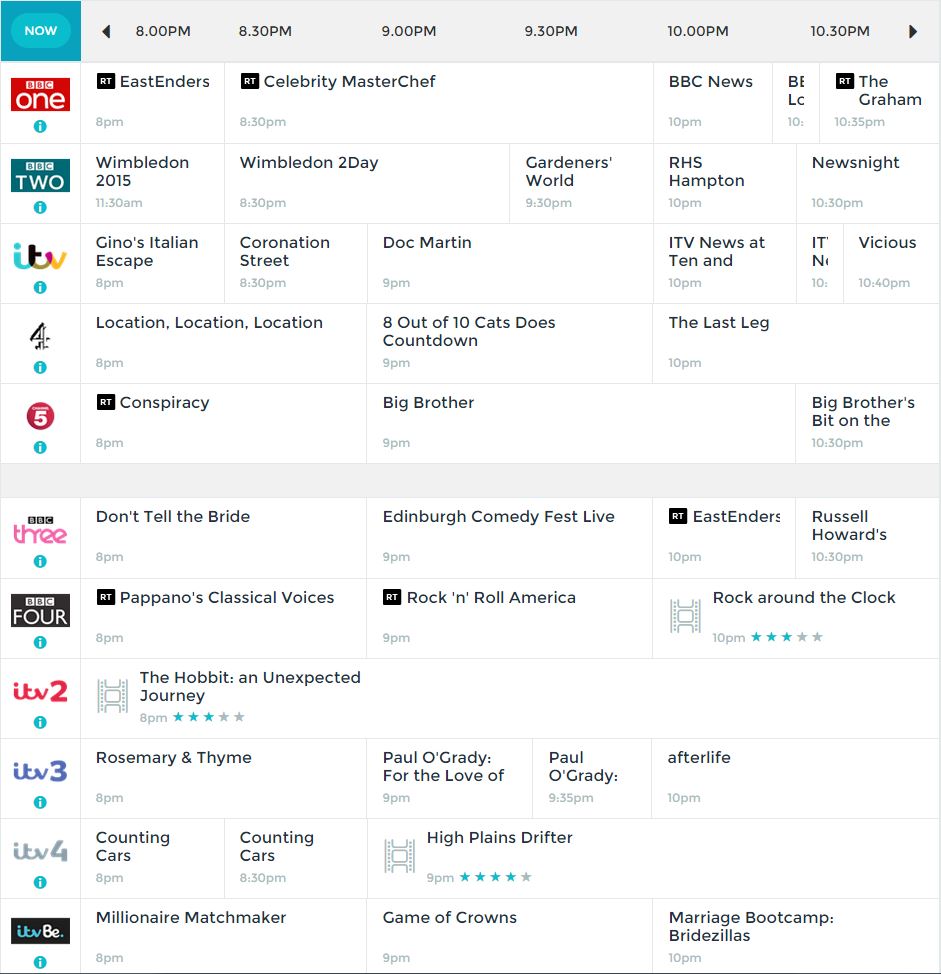
For this part of my research i have decided to look whats on, on a weekday because the type of documentary may differ from what could be shown on a weekend. I chose the times from 7pm because that is when people will be home from work and sitting down for tea and possibly watching the TV and these are the documentaries available.


Monday, 22 June 2015

3MW survey

Create your own user feedback survey

The nature and purposes of research in the creative media industries


Primary Research

Primary research is obtaining unique information gathered by using self-generated research methods such as questionnaires, focus groups and observations. Primary research is very important in the media industry. Primary research enables researchers to build on their skills and gain knowledge regarding the concepts and ideas that are used within the media industry.

For example, I created a survey to gather opinions about mental health. I had an advantage while collecting participants for my survey as a range of mental health and safeguarding advisors were readily available. This provided me with a rich source of information by gaining an experienced perspective of mental health.

Another example of primary research I engaged in was a questionnaire to ask others if they would be interested participating in the documentary and also questioning them on their interest in mental health, so that we were able to collect a range of people that were interested in mental health and those that were not.

Secondary research

Secondary research is an indirect form of research which another individual has already produced to be extracted and expanded on further. Examples include reference-based books, journals, the internet, databases, material ratings and especially government statistics in our case of our documentary based on mental health. I produced a research post gathering our information that we had collected into one document to explain the sources where our information was collected from and how it was to be used. For example I used a youtube clip that was based around a similar idea of how we wanted to present our documentary, by interviewing a range of different people and asking them firstly factual questions about mental health and then diving this into systematic questions about whether or not people were interested in mental health and why. I also looked into what mental health organisations do for the younger generation. I did this by researching onto their actual sites via the internet, at support services available to younger individuals.

 I also looked into official statistics to grasp accurate evidence that would reflect an argument within the documentary.

Quantitative research

This type of research is a data-led one, where it is includes opinions from what people think from a numerical/ statistical point of view, examples like programme reviews, hits on a website or sales on DVD's and CD's. The type of quantitative research I took part in was an opinion poll showing at the age where people are most affected by mental health, I used this to reinforce the view that young people who are most affected by mental health in Here are examples from my documentary.


Qualitative research

This type of research is where the opinions of people are collected more in-depth and do not include statistical figures. Examples include Film reviews, Game reviews, attitudes to media products, responses to advertising campaigns and responses to news coverage. An example from my research could be the questionnaire I conducted because part of that lets the individual expands on their response in a written format. This provides a rich source of information that would not be gathered from numerical data. Additionally the interviews I conducted for my documentary could also be classed as Qualitative research as the answers were based on personal opinion.  

Data gathering agencies

B.A.R.B is an example of a broadcasting agency, it is the organisation that works with TV ratings and audience measurements, researching and giving information to the public domain to show what's popular and what's not and to show reviews of what people like when watching a broadcast.

Another data gathering agency is IMDB, it is a large collection of entertainment information and creators including predominantly movies and TV programmes. IMDB were originally started by a group of movie fans that indulged themselves into the findings behind movies and the deep detail into them. This includes how and where the films are made and why they are made.

Box office mojo are another data gathering agency.'Box Office Mojo is an online movie publication and box office reporting service. our purpose is to illuminate the movies through the integration of art and business. They also have a copyright policy, where less than 20 names/titles of filmography on non-commercial websites can be used, magazines and information boards as long as the source they are gathered from are referenced.

Purpose of Research

Audience and Market Research:
There are many ways to conduct audience and market research in order to know how to target your media product to the appropriate audience. For example, Geo-demographics is how opinions and views can be varied based on where the individual lives, for example a 18 year old male living in Norfolk will have different views and opinions from a 18 year male who lives in London. Demographics is more about the different views and opinions of those in different social classes and locations.

An example of audience and market research I conducted was through the questionnaire on survey monkey, asking first if the responded is a male/ female, to see if the results show that there is a difference in interests between sexes, as mental health is known from the past and arguably the current that it is predominantly males that have a interest and take part in politics. Additionally there is a question on age as it is argued that older people are more interested in mental health and this is where the idea for a documentary comes about.

From the results we can see it is predominantly males that had an interest in taking part in the survey seeing as it was about mental health, this is how we received our market research and incorporated this into our documentary by interviewing equally males and females. 

The age responses is what I predicted as I wanted to target the young audience and see if they are responsive to the survey and as we can see from the results, we can see that it was that age range that was interested in taking part. This is why we interviewed people of this age range to make it compatible with the results we gained from this survey.

Here we can conclude the first two questions effected this question about interest, showing it was mainly males who took part in the survey and seeing that most of the respondents do have an interest in mental health, therefore could argue it is mostly males who are interested. Also we can see that the idea of our documentary about young peoples apathy to mental health is that there is an interest there, this was effective because we had to incorporate this into the interview questions we asked and how we produced our documentary.

Production research
Equally as important as audience research is production research, particularly in a documentary format where you can potentially miss interesting and exciting moments if you are not aware of when and where they are happening. Production research includes viability of the production, financing, technological capabilities, locations and personnel. For our mock election production, as previously mentioned, Reuben and myself attended several meetings with the team who were organising and participating in the mock election event. This gave us the ability to get to know people through the talent release forms, as well as finding out key dates when important events would be taking place. From this we were able to produce a production schedule and we consulted this daily to ensure we had the required equipment and personnel available to us.

here is a link to my pre-production research -----------
Sunday, 7 June 2015

Documentory minitask

Documentary ‘mini-task’
Introduction• 
What is a documentary? A documentary film is a not fiction film intended for documenting reality primarily for the purposes of instruction or maintaining a historical record it.


Expository documentaries 

are usually voiced over with a disembodied and or authoritative which draws the audience in as it addresses the directly and gives an almost personal feeling to the documentary it usually only gives meaning to the images being present and doesn’t give opinions .usually the images are a series in which they complement the voice over in that they are informative and interesting .both sides of the facts and arguments are provided by the voice over which gives a expository documentary giving an objective and transparency .an example will followhttps://www.youtube.com/watch?v=mVc6MlGpcRg


Gangs in Prison - The War (National Geographic Documentary) this fits in well to this category as it provides a view of a power struggle from three sides it fit the voice over and the elements that are usually associated with this kind of documentary.


Observational documentaries 

are when the documentary maker is just following a person around in order to observe the events that happen in their everyday life. The camera will normally be hand held and will have longer takes, with no interviews and usually no voice over. Emphasizing the documentary filmmaker's engagement in observing the subject's daily life and circumstances and documenting them with an unobtrusive camera.By maintaining the observational mode, the director allowed the subject to forget the presence of the camera and behave more naturally, thereby letting the audience get a better sense.An example of this could be The War Room is a 1993 American documentary film about Bill Clinton's campaign for President of the United States during the 1992 presidential election. It is frequently cited as one of the greatest documentaries ever made.Initially, the principal characters seem aware of the filmmakers' presence, but gradually they begin to treat them like friends, and the camera like furniture. Either that or they are pretty good actors. Carville, of course, was probably born under a klieg light, and Stephanopoulos, a master of media manipulation, has the looks of a matinee idol.

Cops (TV series)
Officer Caleb Lenz of the Kansas City Missouri Police Department attempts to catch up to an officer that is in pursuit of a stolen vehicle that was spotted earlier in the evening. As he races to the scene, the officer radios shots fired and soon afterwards radios that he has been wounded in the gunfight. Officer Lenz arrives second on scene and finds another officer with the injured man and a witness frantically pointing out the direction in which the shooter traveled on foot. A quick search of the area turns up the shooter's shedded clothing. A K-9 Unit tracks the shooter to a garage and when the man becomes confrontational the dog bites him as he is pulled from the shed. He is quickly detained and the semi-automatic weapon used in the gunfight is recovered. The young man is treated for his wounds as Officer Lenz talks to the K-9 Officer about the track. Lenz is given updated information that the wounded officer will be okay and is in good spirits.


In Interactive documentaries the filmmakers presence is fully acknowledged, almost emphasized. Become the character and author. The film maker may or may not take sides if there is conflict. There can be problems with interactive documentaries such as access to people and locations. Sometimes they resort to filming in secret which will obviously cause legal problems as you need legal permissions. Access and privacy can effect the production, you need to get wirtten permissions to interview people and places you want to use, if you are not allowed these permissions then you will have to pick a different location and people which could lead to a complete change to the production. 


 "https://www.youtube.com/watch?v=nqOU13nl2TU"  Ross Kemp: Extreme World | Season 4 Episode 1 | Ukraine is an example of an interactive documentary.Reflexive documentaries:Reflexive documentaries are when the filmmaker is nearly always present on camera, as they like to be able to participate. These types of documentaries are usually made up of interviews making the audience participate within arguments and to become manipulated through the text of editing. An example of this would be the documentaries from Louis. His one named “When Louis met Jimmy” in 2000, this one is about when Louis had met with Jimmy Savile and in this series he had accompanied a British celebrity around on their day to day business. He would interview him with questions about his life and experiences. I felt that this interview was very realistic in the way that Louis was within the programme as well as being the voice over. This is evident in the way that there where straight up reactions for the questions being asked, but not only that there was also a shortage on questions for when Louis was put on the spot. This documentary, just like others have fast forwarded the dull parts. The way that will convince the audience that this isn’t like all of the others are with way that it is all mostly filmed with just the one camera, as this is evident with the camera and camera man are able to be seen in the mirrors.


Supersize me Morgan Spurlock 2004
This is an example of a per-formative documentary as the film maker gets involved in the documentary being the main subject and also evidently tells the audience the truths on the subject in hand. Deeply personal, the per-formative mode is particularly well-suited to telling the stories of filmmakers from marginalized social groups, offering the chance to air unique perspectives without having to argue the validity of their experiences. With the filmmaker visible to the viewer, and freed to openly discuss his or her perspective in regards to the film being made, rhetoric and argumentation return to the documentary film as the filmmaker clearly asserts a message.

I feel that documentary films have to present a none bias veiw to be truthful to both parties involved and for the rights of the viewer as showing a bias documentary would brake the trust that us the consumer have with trusted providers.

Research for 3mw

Mental health Research
Statistics
  • About a quarter of the population will experience some kind of mental health problem in the course of a year, with mixed anxiety and depression the most common mental disorder in Britain
  •  Women are more likely to have been treated for a mental health problem than men and about ten percent of children have a mental health problem at any one time
  •  Depression affects 1 in 5 older people
  •  Suicides rates show that British men are three times more likely to die by suicide than British women and self-harm statistics for the UK show one of the highest rates in Europe: 400 per 100,000 population
  •  Only 1 in 10 prisoners has no mental disorder
  • 9.6% or nearly 850,000 children and young people aged between 5-16 years have a mental disorder
  • 7.7% or nearly 340,000 children aged 5-10 years have a mental disorder
  • 11.5% or about 510,000 young people aged between 11-16 years have a mental disorder
  • 3.3% or about 290,000 children and young people have an anxiety disorder
  • 2.2% or about 96,000 children have an anxiety disorder
  • 4.4% or about 195,000 young people have an anxiety disorder
  • 0.9% or nearly 80,000 children and young people are seriously depressed
  • 0.2% or about 8,700 aged 5-10 year-olds are seriously depressed.
  • 1.4% or about 62,000 aged 11-16 year-olds are seriously depressed.
  • 5.8% or just over 510,000 children and young people have a conduct disorder
  • 4.9% or nearly 215,000 children have a conduct disorder
  • 6.6% or just over 290,000 young people have a conduct disorder
  • 1.5% or just over 132,000 children and young people have severe ADHD
  • 1.6% or about 70,000 children have severe ADHD
  • 1.4% or  about 62,000 young people have severe ADHD
  • Between 1 in every 12 and 1 in 15 children and young people deliberately self-harm.
  • There has been a big increase in the number of young people being admitted to hospital because of self harm. Over the last ten years this figure has increased by 68% 
  • More than half of all adults with mental health problems were diagnosed in childhood. Less than half were treated appropriately at the time.
  • Nearly 80,000 children and young people suffer from severe depression.
  • Over 8,000 children aged under 10 years old suffer from severe depression.
  • 72% of children in care have behavioural or emotional problems - these are some of the most vulnerable people in our society.
  • 95% of imprisoned young offenders have a mental health disorder. Many of them are struggling with more than one disorder.
  • The number of young people aged 15-16 with depression nearly doubled between the 1980s and the 2000s.
  • The proportion of young people aged 15-16 with a conduct disorder more than doubled between 1974 and 1999.
  • 1 in 10 children and young people aged 5 - 16 suffer from a diagnosable mental health disorder - that is around three children in every class.
(http://www.youngminds.org.uk/training_services/policy/mental_health_statistics)


Mental Health disorders

ADJUSTMENT DISORDERS
-Adjustment Disorder

ANXIETY DISORDERS
- Acute Stress Disorder
- Panic Disorder
- Agoraphobia
- Social Anxiety Disorder (Social Phobia)
- Specific Phobia
- Obsessive-Compulsive Disorder
- Posttraumatic Stress Disorder
- Generalized Anxiety Disorder

CHILDHOOD DISORDERS
- Attention-Deficit Hyperactivity Disorder
- Asperger's Disorder
- Autism Spectrum Disorder
- Conduct Disorder
- Oppositional Defiant Disorder
- Separation Anxiety Disorder
- Tourette's Disorder

EATING DISORDERS
- Anorexia Nervosa
- Bulimia Nervosa
MOOD DISORDERS
- Major Depressive Disorder
- Bipolar Disorder
- Cyclothymic Disorder
- Persistent Depressive Disorder

NEUROCOGNITIVE DISORDERS
- Delirium
- Vascular Neurocognitive Disorder
- Alcohol-Induced Neurocognitive Disorder
- Neurocognitive Dis. Due to Alzheimer's Disease
-Neurocognitive Dis. Due to Another Medical Condition

PERSONALITY DISORDERS
- Paranoid Personality Disorder
- Schizoid Personality Disorder
- Schizotypal Personality Disorder
- Antisocial Personality Disorder
- Borderline Personality Disorder
- Histrionic Personality Disorder
- Narcissistic Personality Disorder
- Avoidant Personality Disorder
- Dependent Personality Disorder
- Obsessive-Compulsive Personality Disorder
PSYCHOTIC DISORDERS
- Schizophrenia
- Delusional Disorder
- Brief Psychotic Disorder
- Schizophreniform Disorder
- Schizoaffective Disorder
- Shared Delusional Disorder

SUBSTANCE-RELATED DISORDERS
- Alcohol Use Disorder
- Amphetamine Use Disorder
- Cannabis Use Disorder
- Cocaine Use Disorder
- Inhalant Use Disorder
- Opioid Use Disorder
- Other Hallucinogen Use Disorder
- Phencyclidine Use Disorder
- Sedative, Hypnotic, or Anxiolytic Use Disorder
- Tobacco Use Disorder

Filming in public

Local authority
If you want to film on public land you will need permission from the appropriate local authority or council. They are responsible for public land, public buildings, roads and parking. The UK screen agencies can help you get in touch with the appropriate local authority contact.

Police
You will need the full co-operation of the local police force if you plan to film on a public highway or use special effects, explosives or fire arms (including replicas). You will also need permission to portray uniformed police officers or marked police vehicles on film.
You should inform the local police force in writing of any planned filming within its jurisdiction. The UK screen agencies can help you arrange this process.

Filming on public roads
Before filming on a public road you must contact the local police and the Highways Department of the local authority. Both will need to make sure that your plans are safe and pose no threat to road users. If you plan to stage stunts, a stunt co-ordinator should be involved in any planning discussions.
You will need details of the safety conditions covering any tracking vehicles you hire and also find out what permissions and rights clearances have been granted at the location.

Permission and Rights clearances
If you film an actor inside a store or restaurant, you need written permission to use the location and also to show the chain’s name or trademark. If you film outside a store or restaurant you do not need permission to show its name or trademark – however, if the location chosen is used to communicate a negative message in your film (for example, a film about ‘poisoned restaurant food’) you may risk legal proceedings. You do not need to ask passers-by for permission to feature their faces in a film. Under UK law, the copyright of film shot in a public place resides with the filmmaker.

(http://www.britishfilmcommission.org.uk/crew-facilities/locations/filming-in-public-spaces/)

Monday, 13 April 2015

3 minute wonder Proposal

Initial ideas for our 3 Minute Wonder

1) Mental health

- Folding paper to reveal different disorders we will be talking about.
- Interviewing both sides of mental health.
- Showing people the true effect.
- Showing both facts and emotions.

2) Mental and physical health
- Folding paper to reveal different disorders we will be talking about.
- Interviewing both sides of physical and mental health.
- Showing people the true effect.
- Showing both facts and emotions.

3) Disabilities
- Folding paper to reveal different disorders we will be talking about.
- Interviewing both sides of disabilities.
- Showing people the true effect.
- Showing both facts and emotions.


Our favourite/chosen idea 

Our chosen idea was mental health.
We have chosen this Idea we feel this would be the most accessible and most informative video to create for this project. We chose this idea as there is a massive stigma around mental health and most people aren't aware of the issues surrounding it.
- Folding paper to reveal different disorders we will be talking about.
- Interviewing both sides of mental health from the professional and unprofessional sides.
- Showing people the true effect that it can have on the sufferer and the people that surround them.
- Showing both facts and emotions from the sufferers and the people around them showing the effects that it can cause and the struggle some face to communicate.

The brief outline for the production
- Documentary / educational.
- All ages of both sexes.
- The aim of the documentary is to inform and educate the audience of the effects and truth behind mental illness. This will be done a way which is both dignified and truthful but not cold hard facts as this hides the people coping with them. Interactive and observational documentary will be the form. We will be filming within college with Lisa and Oz Osborn who are college support for students and also a suffer of mental health and her boyfriend. The crew will be made up of me and poppy I will do the majority of filming and we will joint edit and production.


Sample interview questions we may use
1) Why do you think there is a stigma surrounding mental health?
2) What do you think is the main problem is surrounding mental health?
3) Do you think there is enough support for people suffering from mental illnesses?
4) How does it affect the people who suffer from mental illnesses daily life?
5) Do people treat individuals with mental health illnesses differently to ‘normal’ people?

Equipment, props and costumes we may use
- Camera
- Tripod
- SD card
- Paper
- chair
Due to the facilities offered by the college we will not need a budget as we will not have to buy anything that we will require for our 3 minute wonder.

Tuesday, 10 March 2015

Introduction to News

Part 1
09:00 - 10:00 BBC News  09/03/2015
Twenty-four hours a day, the latest national and international stories as they break.
Start sequence
Typical start sequence with the BBC theme

News stories
·         Free schools: David Cameron pledges 500 more by 2020  (http://www.bbc.co.uk/news/education-31791485)
·         Tristram hunt MP comments on this
·         Former Senior Policeman Dal Babu Slams UK's Anti-Radicalisation Strategy For 'Spying' On Muslims.  (http://www.bbc.co.uk/news/uk-31792238)
·         Warning over young diabetics' health (http://www.bbc.co.uk/news/health-31766645)
·         Crufts dog poisoned
·         Toddler rescue
·         Solar plane
·         Euro zone plan flawed Woodford

Side stories
Between stories one and two are stating that.
·         Ed Balls: Conservatives planning extreme spending cuts (http://www.bbc.co.uk/news/uk-politics-31790067).
·         Ed Miliband linked to Scottish national party say Tories.


Part 2
Presenters
Carol walker
Simon McCoy


Are the presenters of the BBC news.

Norman Smith commenting on the Ed Ball story.
a TV news reporters job  is to deliver stories that are of interest to the show's viewers. TV reporting jobs are extremely competitive; the reporters who understand how to present relevant stories that interest and inform viewers have the best chance of getting hired. TV reporters find and investigate news in their community as well as write and deliver compelling news stories. There are usually given a script and are given instructions from a director and crew through an ear piece. News reporters are usual male and females between the age of 20 upwards they usually are chosen for a reason. The presents usually talk in a way in which they are drawing in the audience. The tone of the presenter’s voice is usually friendly but sometimes can be firm. The dress is usually smart but casual these are all done for a comfortable friendly feeling to the programme as the new is daily and it’s aimed at putting across truthful news in a n effective manner. The news reporter are directed on how to link stories through both the moving images played in-between and during and on how they comment and speak about what’s coming next to try and make a seamless feeling to the show .

Part 3


•             The term news ordering is used to describe the way in which news order is decided by a number of contributing factors which include; audience, breaking news story, topic and length. They are then put into a running order which is then used to create the auto queue but this order is flexible if a breaking story comes in they will change the order and remove and add things in.the most relevant and most news worth is likely to be shown first as this gives a hard hitting story to draw in and  also is usually take if a breaking story comes in The most likely story to be shown first is breaking news or news that is the biggest or most relevant for the audiences.it is usually selected by the director of the news and is a predicted story unless something come in short notice. the other stories appear in relevance and usually there is a happy piece of new placed at the end to end on a good note. but this depends on different .the ability to think quick and have a lot of staff helps with the smooth running off current and up to date news with stories coming in minuets before the news is about to be broadcast this would be on a fast news day but the other end of the scale is a slow news day in which you get minimal stories and have the usual stories that are run of the mill so you have to be on the look out for new up to date stories .Sometimes called tail-enders, closing stories are almost as important as lead stories. They are the last stories your listeners will hear and remember from the bulletin. You need to choose them carefully. However, because many listeners do not maintain their attention throughout the whole bulletin.

Part 4 (using the old broadcast about the Chowles)
 Government certainly suggests that the intrest rate cut will nothing yet to help home owners with mortgage repayments.
This story is about the number of people getting their homes repossessed for not meeting there repayments doubled last year according to a report that has been published by council of mortgage lenders. There are two main characters with in this story who are pier Chowles and his wife Christina and a sub character of their baby. They are represented in a way which displays them as victims of the system. They are also show to be normal working class people, who are first time buyers and parents. This story is used in this way to connect to a wide audience of the time it was broadcast. The story is displayed in a way in which you are supposed to feel empathy to the couple and feel like they are the same as you and its affecting you. The news story was narrativised throughout to help the audience connect and follow the story in a chronological order which is they purchased a one bedroom house for £57,000 on 100% mortgage, shortly after this --- lost his job as a factory worker to ill health. The family soon got behind on their mortgage repayments now they owe the building society more than £6000 pounds and their home is due to repossessed. They have another baby on the way. The new interest rate could have helped them but it’s too late the local council only have bed and breakfast available.

Part 5 (using a broadcast you have found)
The broadcast found was a BBC live broadcast that was Ed Balls speaking about how Labour will try and change all the Torrie governments mistakes with the economy and so on. Ed Balls wasnt really represented in any particular light, he was just standing in front of a room full of reporters going on about how he's going to fix the economy and how his party would make this happen. There was not much, if at all of a narrative or story to it, it was just a standard press conference. Had their been a narrative it may have made people who were totally in the know with politics confused. This is similar with the story aspect, it was just Ed Balls standing in front of various reporters and news cameras talking about the economy and so on and so forth.  

Part 6 (using  mediaknowall)
The act of being biased is, in basic terms, is being swayed towards a certain viewpoint or way of thinking through a number of different techniques such as through selection, order and placement, wording of a headline, camera angles, use of captions and overall choice of words."The Sun" is a mainly conservative newspaper, so they will report anything that makes the Tories look good & cast doubt or negative light on their competitors, such as Labour or the Lib Dems. This kind of selection/ omission bias can occur anywhere , but happens most frequently and noticeably in newspapers.

Bias within placement is a measure on how important the editor considers the story, placement of headlines is key because it is the most important part of a newspaper and the part that everyone reads before they purchase the newspaper is has to be the biggest story that is most relevant to the public interest. An example of this is today's news:


This shows that what the news believes is of the highest importance of the British public interest is politics, However the headlines the key mechanism to attract the people and the fact that it is placed on the front, directly addresses the audience and show the significant importance.the key attraction for the eye is the larger image and bold larger type.

Bias by headline: Headlines are the must-read part of a newspaper because they are often printed in large and bold fonts. Headlines can be misleading: conveying excitement when the story is not exciting; expressing approval or disapproval. 

Bias by captions, and camera angles: Pictures can make a person look good, bad, sick, silly, etc. Which photos a newspaper chooses to run can heavily influence the public's perception of a person or event. On TV, images, captions, and narration of a TV anchor or reporter can be sources of bias.


Names and captions can also be subject to bias. continuing on with my political examples, if the media wanted to make an interviewee seem very important they may include their title such as "Dr Steve brown". The caption may also be used in such a way, for example it may read "Dr Steve Brown, nyrological activity expert" instead of just simplifying it to say "Brain expert" while they both mean the same thing, the first, longer caption seems far more impressive


Bias by choice of words: People can be influenced by the use of positive or negative words with a certain connotation. People can also be influenced by the tone that a newscaster uses when saying certain words.

About 40 people were treated by paramedics for breathing problems following a chemical leak at a holiday park swimming pool.
Emergency services were called to Wild Duck Holiday Park in Belton near Great Yarmouth in Norfolk at 14:35 BST.
Police said the entertainment complex was evacuated but the pool was declared safe at about 17:30 BST.
Norfolk Fire Service said vehicles including an environmental protection unit dealt with a chlorine leak.